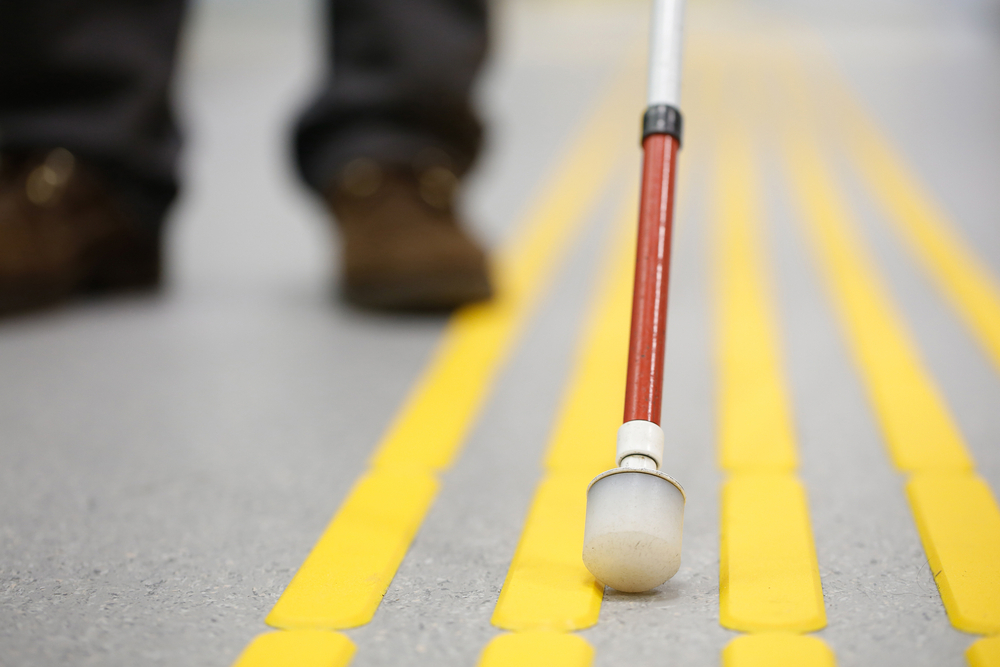

- Tactile Indicators
- 22, 01, 2016
Our mission is to provide the highest-quality, highest-performing anti-slip and way-finding products in the world.
We notice that the majority of them lack tactile indicators or platforms daily while commuting in public locations. This simply goes to show that we still need to focus on spreading awareness about a disabled-free environment so that the visually impaired can easily participate in the most fundamental activities like strolling down a busy street, riding public transportation, eating in a busy restaurant, and so on. In a country like India, empowering the country’s most capable inhabitants is vital for the country’s progress and development.
Tactile indicators are commonly found in the outside world, but they can also be used to help visually impaired people navigate both interior and outdoor environments. Many visually impaired people have tactile indicators as well as other products put in their houses to assist them in operating more efficiently. However, in the external environment, it is more necessary to guarantee that the visually impaired are not in danger.
A visually challenged person faces a range of obstacles in the outside world. Walking or crossing a congested road is difficult for them. It can be challenging to find the appropriate platforms at metro and bus terminals. Public transportation becomes quite difficult for them. They have a hard time climbing stairs and walking on uneven ground. They also have difficulty getting to public places such as shopping malls, restaurants, movie theaters, and other popular places quickly and effortlessly. These are just a few of the daily obstacles that visually impaired people experience in both their internal and external settings.
 Eminent Tactiles strives to produce products that will make the life of the visually impaired easier daily. We design goods with the visually impaired in mind, with the primary purpose of providing safety and security to visually impaired persons, particularly in the outdoor environment. All of our goods are created using high-quality materials to ensure that they are safe and secure to use. Similarly, our items have been tried and tested to ensure the finest possible experience.
Our goal is to help build experts all across the world to improve the accessibility and safety of public spaces for everyone. We want to better serve our communities by ensuring that people with disabilities enjoy dignified, safe, and independent access to the built environment.
Our products are designed to allow visually impaired people to solve their challenges. Our wide range of products, as well as the variety of designs and colors available, make it very convenient for customers because they can be set up in a variety of areas both inside and outside the structure. On pedestrian pathways, stairwells, escalators, sidewalks or footpaths, and, most importantly, any hazardous situation where a visually impaired person’s life could be risked, tactile tiles, studs, strips, and tactile indicators can be placed.
These installments and our products have aided a significant number of visually impaired people across India. It has given the blind a sense of independence, liberty, and freedom. Because of the accessibility and relevance of our tactile objects, a visually impaired person does not require assistance and may walk around alone. They aid visually impaired people in recognizing and avoiding a variety of risks, making traveling and other basic needs of visually impaired people simple and safe.
The tips for keeping the workplace safe for people who are blind or visually impaired are as follows:
- Consider the room’s layout; straight lines are easier to navigate for everyone.
- If you’re going to put something on their desk, such as a cup of tea, make sure you let them know.
- It’s unsafe to run wires from one desk to the next or across halls.
 It’s easy to walk into slightly open doors, cabinets, and other open spaces.
- To avoid interference, keep light levels consistent throughout the building. Vertical blinds can be used to control the quantity of light that enters the office.
- Consider refurbishing the office using color; create color contrast around door frames, and use it to contrast chairs from desks from carpets, and so on.
- To assist children in navigating along a wall, tactile components such as rails might be used.
- Signage should be large enough to read and located at a convenient height, such as eye level.
- Keep waste, such as bags, boxes, bins, and other items that can be easily overlooked and tripped over, out of pathways.
- They may use task lightings, such as a magnifying lens and concentrated light placed on the workstation for reading written items.
When creating, designing, and manufacturing our products, Eminent Tactiles considers security, safety, accessibility, and equality, as well as quality. Our entire team works around the clock to create more tactile things to assure the growth, progress, and safety of the visually impaired. The goal is to improve the world’s place to live, and also what is a better way to achieve so than by living somewhere that promotes security, safety, equality, growth, and accessibility.
Our products are our quality certificates, and they safeguard the lives of the blind and visually impaired.
Public spaces can be made safer by installing tactile indicators, ensuring obstacle-free walkways, creating color contrast on stairs and entrances, improving lighting levels, and adding clear signage. These accessibility measures help visually impaired people navigate independently and safely.
Tactile indicators are textured surfaces—such as studs, strips, and tiles—designed to provide directional guidance and hazard warnings. They help visually impaired individuals detect edges, steps, and obstacles using their feet or cane.
Tactile indicators should be installed at pedestrian pathways, railway stations, metro platforms, bus terminals, stairs, escalators, footpaths, building entrances, ramps, and any hazardous location where guidance is needed for safe navigation.
Tactile products guide users toward safe paths and warn them of hazards like drop-offs, road crossings, platform edges, and obstacles. They empower visually impaired individuals with independence, confidence, and safe mobility.
They often struggle with crowded roads, uneven surfaces, stairs, bus or metro platforms, unclear signage, obstacles on footpaths, and poor lighting. These barriers make independent navigation difficult without proper accessibility systems.
India has a large visually impaired population that relies heavily on public infrastructure. Accessible environments promote independence, dignity, safety, and equal participation, which contribute to the country’s overall social and economic development.
Yes. Tactile indicators are used in homes, offices, hospitals, malls, airports, schools, and public buildings. They assist visually impaired individuals in navigating safely both indoors and outdoors.
Color contrast helps people distinguish between doors, walls, floors, and furniture. Large, high-contrast signage at eye level improves way-finding and ensures easy identification of important areas.
Organizations can install tactile indicators, improve lighting, maintain clutter-free environments, provide color contrast, ensure accessible entryways, train staff, and follow accessibility standards such as ISO 23599 and national disability guidelines.
Eminent Tactiles produces high-quality, tested tactile studs, strips, and tiles designed for maximum safety, durability, and accessibility. Their products help visually impaired people navigate confidently, independently, and safely in public and private spaces.

offer now at
Our Clients