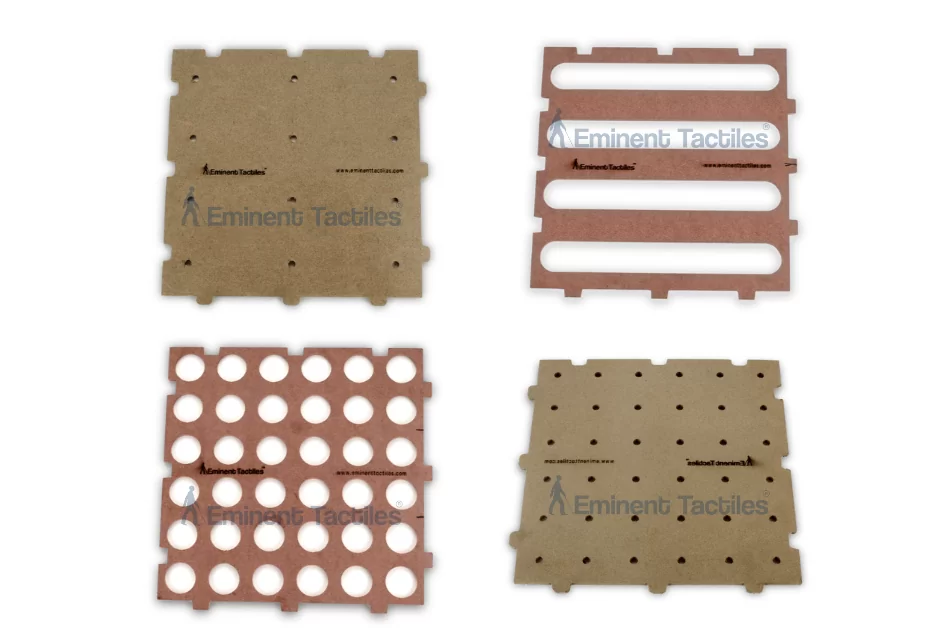

- Tactile Indicators
- 13, 05, 2024
Tactile Ground Surface Indicators (TGSIs) are essential tools that help people with visual impairments navigate safely in public places. Commonly installed on floors, walkways, and stairs, they provide clear tactile warnings about hazards, level changes, and direction shifts, improving independence and safety in everyday movement.
But how are these important safety features placed with precision where they are needed most? This is where TGSI installation templates play a vital role. TGSI installation templates are placement guides used to accurately install tactile ground surface indicators such as studs and strips. They ensure correct spacing, alignment, and compliance with accessibility standards, making public spaces safer and more reliable for visually impaired users.
Think of an installation template as a blueprint or guide for installers. It helps ensure every tactile indicator is positioned evenly and consistently, reducing errors during installation. This accuracy isn’t just about meeting regulations—it’s about creating inclusive, accessible environments where everyone can move with confidence.
What are Installation Templates?
When it comes to making public places safe and accessible for everyone, especially those who are visually impaired, installation templates for Tactile Ground Surface Indicators (TGSI) play a crucial role. But what exactly are these templates? Let’s break it down in simple terms.
Tactile indicators Installation templates are special tools that help workers place tactile indicators—like those bumpy strips and dots on the ground—precisely where they need to be. These templates are designed to fit different shapes and sizes of tactile indicators, ensuring that they are installed correctly and consistently.
The main benefit of using these templates is that they make the installation process much easier and faster. Imagine trying to draw a straight line without a ruler or paint a complex picture without an outline. Without a template, installing tactile indicators accurately would be just as challenging. The template acts like a map, showing where each indicator should go, ensuring they are spaced perfectly and aligned correctly.
Self-Adhesive Tactile Stud Installation Template

Imagine you’re given a puzzle to solve, but this time, you’re equipped with a map that shows exactly where each piece should go. That’s the kind of game-changing simplicity self-adhesive tactile stud installation templates bring to the table. These innovative tools are revolutionizing how tactile indicators are installed in public spaces, ensuring precision and ease with every stud placed.
What is a Self-Adhesive Tactile Stud Template?
A self-adhesive tactile stud template is a specialized tool designed to streamline the installation of tactile studs, which are essential for guiding visually impaired individuals through public areas. This template is not just a guide; it’s an exact blueprint that sticks directly to the surface where the studs need to be installed. It marks the precise location for each stud, eliminating any guesswork and ensuring that each piece is positioned correctly.
How to Use This Template: A Step-by-Step Guide
Using a self-adhesive tactile stud installation template is as straightforward as it gets. Let’s walk through the steps:
- Prepare the Surface: Ensure that the installation area is clean and dry. This helps the template adhere better and ensures a clean installation.
- Position the Template: Peel off the backing of the template to expose the adhesive side. Carefully align the template on the surface where the tactile studs will be installed. Once positioned, press it down firmly to adhere it to the surface.
- Install the Tactile Studs: Each spot on the template indicates where a stud should go. Simply place the stud in the designated spot and apply pressure. The template ensures they are spaced perfectly and aligned correctly.
- Remove the Template: Once all studs are in place, gently peel off the template. The studs will remain securely attached to the surface.
Advantages of Using Self-Adhesive Templates
The benefits of using self-adhesive templates are significant:
- Speed: Reduces the time needed to measure and mark each stud’s position, speeding up the overall installation process.
- Accuracy: Ensures that each tactile stud is placed precisely, enhancing the functionality and effectiveness of the tactile pathway.
- Ease of Use: Simplifies the installation process, making it accessible even for those with limited experience in handling such tasks.
Self-Adhesive Tactile Strip Installation Template

Have you ever experienced the thrill of seeing a complex task simplified right before your eyes? That’s the kind of magic that self-adhesive tactile strip installation templates offer. These innovative tools are not just about sticking things onto a surface; they are about transforming the way tactile strips are installed, making it faster, more accurate, and incredibly efficient.
What is a Self-Adhesive Tactile Strip Template?
A self-adhesive tactile strip template is a game-changer in the field of accessible design. Designed specifically for the installation of tactile warning strips, these templates come with a self-adhesive backing that sticks directly to the surface where the strips will be laid. This isn’t just any stencil—it’s a precision tool tailored to guide the placement of tactile strips, ensuring they meet both safety standards and aesthetic requirements.
How to Apply These Templates for Strip Installation
Applying a self-adhesive tactile strip installation template is straightforward, transforming a potentially tedious process into a smooth, error-free procedure. Here’s how you can do it:
- Clean the Surface: Start with a clean, dry surface to ensure the template adheres properly and the strips stick without issues.
- Position the Template: Remove the backing to reveal the adhesive side of the template and carefully position it on the intended area. Press it down smoothly to secure it in place, ensuring there are no bubbles or wrinkles.
- Install the Tactile Strips: With the template firmly in place, follow the guides to lay down the tactile strips. The template ensures that each strip is perfectly aligned and spaced, which is crucial for both functionality and visual appeal.
- Remove the Template: Once all strips are installed, gently peel away the template. What you’re left with is a perfectly laid out path of tactile strips, ready to assist and guide.
Benefits of Using Self-Adhesive Templates
The advantages of using self-adhesive templates for installing tactile strips are clear and impactful:
- Reduced Installation Time: Say goodbye to the old methods of measuring and marking. These templates cut down installation time significantly, allowing you to complete projects faster and more efficiently.
- Increased Consistency: Each strip is placed with precision, ensuring uniformity across the installation. This consistency is not just about aesthetics; it ensures that the tactile cues are effective and reliable for those who depend on them.
- Ease of Use: The self-adhesive nature of these templates makes them incredibly easy to use, opening up the installation process to a broader range of people, regardless of their previous experience.
Tactile Stud with Stem Installation Template

Navigating through public spaces can be a challenge for those with visual impairments, but tactile indicators like the tactile stud with stem make it easier. These small yet vital components are crucial in creating accessible environments, and the tactile stud with stem installation template is the key to installing them accurately and efficiently.
Overview of the Tactile Stud with Stem Template
The tactile stud with stem template is specifically designed for installing tactile studs that have a small stem on the bottom. This type of stud is particularly durable and is meant to be installed on various surfaces to help visually impaired individuals detect changes in their surroundings through their feet. The template itself is a robust tool that ensures each stud is positioned correctly, maintaining consistent spacing and alignment.
Process Description for Using This Template
Installing tactile studs with stems using the template involves a straightforward process, but it does require some preparation and specific tools to ensure everything goes smoothly. Here’s what you need to do:
- Prepare the Surface: Start by cleaning the area where the studs will be installed. It should be free of dust, debris, and any moisture to ensure the studs adhere properly.
- Mark the Installation Points: Use the template to mark where each stud should go. The template has holes or marks that show exactly where to place the studs.
- Drill Holes: Depending on the type of surface and the stud design, you may need to drill holes. This is where the stem of each stud will be inserted. Make sure to use a drill bit that matches the size of the stems for a snug fit.
- Install the Tactile Studs: Place the stud into the pre-drilled hole. For some models, you might need to use a hammer or a special tool to secure the stud in place. Make sure each stud is firmly attached and level with the surface.
- Check the Installation: Once all studs are installed, remove the template and check the alignment and spacing. Adjust any studs if necessary to ensure they are perfectly aligned.
Highlighting the Precision and Reliability Offered by Stem-Based Templates
Using a tactile stud with stem installation template offers several advantages:
- Precision: The template ensures each stud is placed exactly where it needs to be, with uniform spacing and alignment. This precision is crucial not only for aesthetic reasons but also for functionality, as it affects how effective the tactile indicators are for users.
- Reliability: Stem-based tactile studs tend to be more durable and secure because they are anchored into the ground. The template helps ensure that each stud is installed deeply and securely, reducing the risk of them coming loose over time.
- Efficiency: With the template, the installation process is quicker and more straightforward. There’s no need for constant measuring or guesswork, which saves time and reduces the chance of errors.
Tactile Strip with Stem Installation Templates

Tactile strips with stems are designed to provide a durable and noticeable physical cue on surfaces where they are installed. These strips are embedded into the ground using stems, making them more robust and long-lasting. The installation templates for these strips are specifically engineered to aid in this process, ensuring that each strip is placed precisely and consistently, which is crucial for the tactile navigation aids to be effective.
Instructional Content on the Installation Process Using These Templates
Using a tactile strip with stem installation template involves a series of steps designed to ensure a smooth and accurate installation. Here’s a detailed guide:
- Surface Preparation: Begin by preparing the installation area. This involves cleaning the surface thoroughly and ensuring it is free from any debris, dust, or moisture that might interfere with the installation.
- Positioning the Template: Lay the template on the designated area. These templates are typically designed to be straightforward, with clear markings where each strip’s stem should go. Secure the template to prevent it from moving during the installation process.
- Drilling and Preparing Holes: Use the markings on the template as a guide to drill holes for the stems. The holes should be of the correct diameter and depth to ensure the stems fit snugly and securely.
- Installing the Tactile Strips: Insert the stems of the tactile strips into the pre-drilled holes. Depending on the design, you might need to use a hammer or mallet to tap them into place, ensuring they are securely anchored.
- Removing the Template: Once all strips are installed, carefully remove the template. Check the alignment and spacing of the strips to make sure they meet the required standards.
Discussion on the Effectiveness of Stem Templates in Various Substrates
Tactile strips with stem installation templates offer several benefits that make them particularly effective across various substrates:
- Durability: The stem-based design allows the tactile strips to be more securely fixed into the ground compared to adhesive-based methods. This is particularly beneficial in outdoor settings or high-traffic areas where durability is crucial.
- Versatility: These templates can be used on a variety of substrates, including concrete, asphalt, and stone. The ability to drill and secure the stems effectively in different materials ensures that the tactile cues are accessible in diverse environments.
- Precision and Uniformity: The templates ensure that each strip is installed at the exact required distance and alignment. This uniformity is vital for the effectiveness of the tactile navigation system, as it provides consistent cues for visually impaired users.
Conclusion
Installation templates play a crucial role in enhancing accessibility and safety through the precise placement of tactile indicators. These tools, whether self-adhesive or stem-based, cater to various environments and needs, ensuring that tactile cues are installed accurately and consistently.
The right use of installation templates not only aids navigation for the visually impaired but also fosters independence and confidence, making public spaces more inclusive. As we continue to improve our infrastructures, adopting these precise installation methods is essential.
A tactile indicator installation template is a guide that shows the exact positions for tactile studs or strips. It ensures precise alignment, correct spacing, and uniform placement, making installation faster and more accurate.
Self-adhesive templates stick directly to the surface. Workers simply place studs on the marked spots, press firmly, and then remove the template. This method ensures speed, accuracy, and consistent spacing.
These templates guide the placement of tactile warning strips. After cleaning the surface, the template is positioned, strips are applied following the guide, and the template is peeled off. This ensures even alignment and functional tactile pathways.
Stem-based templates are used for tactile studs or strips with a small stem that anchors into the surface. The template marks drilling points for the stems, ensuring durable, precise, and long-lasting installation, especially on outdoor or high-traffic surfaces.
Yes, installation templates work on concrete, tile, vinyl, asphalt, and stone surfaces. Self-adhesive templates are ideal for smooth indoor surfaces, while stem-based templates suit rougher, outdoor, or high-traffic areas.
Yes, using installation templates helps ensure tactile indicators meet national and international accessibility standards, such as BIS (India), ADA (USA), and AS 1428.4 (Australia), by maintaining correct spacing, alignment, and contrast.
A tactile indicator installation template is a precise guide that marks the exact positions for installing tactile studs or strips. It ensures correct alignment, consistent spacing, and uniform placement, which makes the installation process faster, accurate, and compliant with accessibility standards.
Self-adhesive tactile stud templates stick directly to the floor or surface. They have marked spots where tactile studs should be placed, eliminating guesswork and ensuring perfect spacing and alignment during installation.
These templates are designed with adhesive backing to stick to the surface where tactile strips will be installed. They guide the placement of each strip precisely, making the installation quicker, more consistent, and visually aligned.
Stem-based templates are used for tactile indicators with stems that require drilling into the surface. The template helps mark where holes should be drilled so the stems fit securely, providing durability and long-lasting installation.
Yes, installation templates are versatile and can be used on various floor types, including concrete, asphalt, tiles, and wood. However, the installation method (adhesive or stem-based) may vary depending on the surface material.
Installation templates help ensure tactile indicators meet accessibility standards such as AS/NZS 1428 and ADA by guaranteeing precise placement, spacing, and alignment required for effective tactile guidance.

offer now at
Our Clients