
- Tactile Indicators
- 7, 04, 2026
Tactile indicators play a crucial role in making public and commercial spaces safer and more accessible for people who are blind or visually impaired. These specially designed surface markers—commonly used in walkways, railway stations, airports, and buildings—provide essential guidance and hazard warnings through touch. As accessibility standards continue to evolve worldwide, the demand for reliable tactile paving solutions is growing rapidly, making it more important than ever to understand the materials behind them.
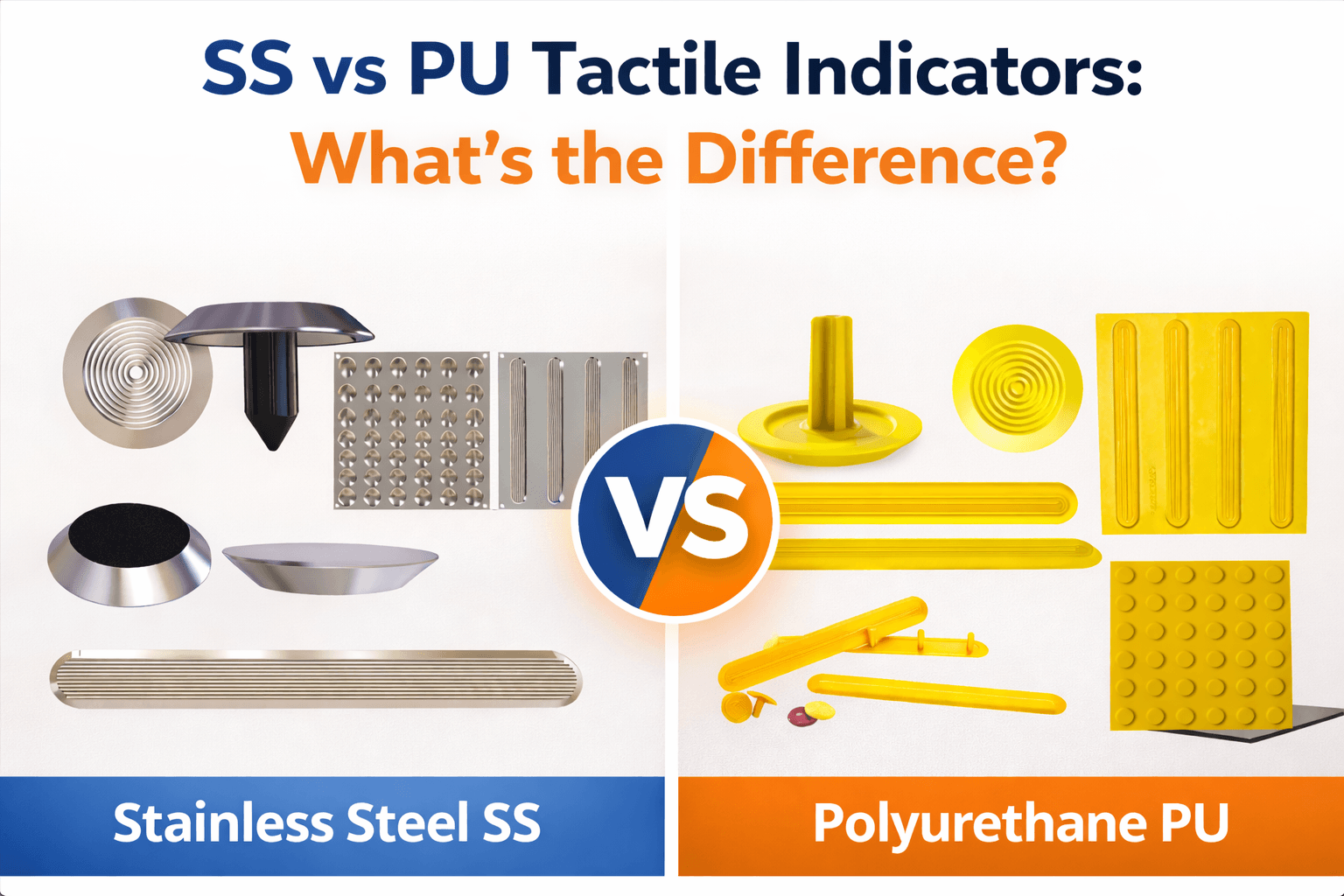
When comparing SS vs PU tactile indicators, the choice depends on performance, environment, and long-term value. Stainless steel offers high durability and strength, while PU provides flexibility, anti-slip safety, and cost-effectiveness. The right choice impacts safety, maintenance, and compliance.
What Are Stainless Steel (SS) Tactile Indicators?
Material & Structure
- Made from high-quality stainless steel
- Designed as raised studs or strips for tactile feedback
- Strong and rigid construction
- Can withstand heavy loads and pressure
- Ideal for long-term use
Key Features
- Corrosion-resistant (does not rust easily)
- Suitable for high foot traffic areas
- Extremely durable and long-lasting
- Maintains shape and performance over time
- Provides clear tactile guidance for safety
Common Applications
- Railway stations
- Airports
- Outdoor footpaths and sidewalks
- Pedestrian crossings
- Public infrastructure projects
What Are Polyurethane (PU) Tactile Indicators?
Material & Composition
- Made from flexible polyurethane material
- Soft yet durable compared to metal options
- Lightweight and easy to handle
- Can adapt to different surface types
- Ideal for indoor tactile applications
Key Features
- Anti-slip surface for better safety
- Comfortable underfoot, especially in indoor areas
- Easy installation (available with adhesive backing or glue fixing)
- Requires low maintenance
- More cost-effective compared to stainless steel options
Common Applications
- Shopping malls and retail stores
- Office buildings and corporate spaces
- Hospitals and healthcare facilities
- Indoor flooring and pathways
- Commercial buildings and public interiors
SS vs PU Tactile Indicators – Key Differences
Quick Comparison (Point Format)
Material Strength
- SS tactile indicators → Very strong and rigid
- PU tactile indicators → Flexible and lightweight
Durability
- SS → Extremely durable, long lifespan
- PU → Good durability, best for indoor use
Slip Resistance
- SS → Moderate (depends on surface finish)
- PU → High anti-slip surface (safer indoors)
Cost
- SS → Higher initial cost
- PU → Budget-friendly and cost-effective
Installation Method
- SS → Drill & fix (permanent installation)
- PU → Adhesive or glue fixing (quick and easy)
Maintenance
- SS → Very low maintenance, long-term performance
- PU → Low maintenance, but may need replacement earlier
Indoor vs Outdoor Use
- SS → Best for outdoor & heavy traffic areas
- PU → Best for indoor & medium traffic areas
Which Tactile Indicator Is Best for Your Project?
Choosing the right option in the SS vs PU tactile indicators comparison depends on where and how you plan to use them. A simple guide to help you make your decision:
Choose Stainless Steel (SS) Tactile Indicators If:
- You need a solution for high-traffic areas
- The installation is in outdoor environments
- You want maximum strength and durability
- The project requires a long lifespan with minimal replacement
- Suitable for places like railway stations, airports, and sidewalks
Best for: Heavy-duty and outdoor applications
Choose Polyurethane (PU) Tactile Indicators If:
- The project is for indoor spaces
- You are working with a limited budget
- You need an anti-slip and safer surface
- You want a quick and easy installation
- Ideal for malls, offices, hospitals, and commercial interiors
Best for: Indoor and cost-effective applications
Use Case Examples (Real-World Applications)
Understanding where to use each material makes it easier to choose the right option from the SS vs PU tactile indicators comparison. Here are some common real-world applications:
Railway Platforms
- Use SS tactile indicators
- Handles heavy foot traffic and harsh conditions
- Provides long-lasting performance in public transport areas
Airports
- Use SS tactile studs
- Ideal for high-traffic zones and luggage movement areas
- Strong, durable, and reliable for long-term use
Shopping Malls
- Use PU tactile tiles
- Best for indoor flooring and smooth surfaces
- Offers anti-slip safety and aesthetic appeal
Hospitals
- Use PU tactile indicators
- Provides a comfortable and safe walking surface
- Suitable for patients, elderly users, and indoor navigation
Sidewalks & Pedestrian Crossings
- Use SS tactile indicators
- Designed for outdoor environments and weather exposure
- Strong enough to handle continuous public use
Quick Summary
- SS tactile indicators → Best for railway stations, airports, sidewalks, and outdoor areas
- PU tactile indicators → Best for shopping malls, hospitals, offices, and indoor spaces
Common Mistakes to Avoid When Choosing Tactile Indicators
Choosing the right tactile solution matters for safety and durability—avoid these common mistakes when following a tactile indicator guide.
Using PU in Heavy Outdoor Areas
- PU tactile indicators are best for indoor use
- Avoid using them in outdoor or high-traffic environments
- They may wear out faster under sunlight, rain, and heavy loads
Overusing SS in Low-Traffic Indoor Spaces
- SS tactile indicators are strong but not always necessary indoors
- Using them in low-traffic areas can increase project costs unnecessarily
- PU is often a better and more economical choice for indoor spaces
Ignoring Installation Surface Compatibility
- Not all tactile indicators suit every surface
- Always check if the surface is concrete, tile, wood, or metal
- Choosing the wrong type can lead to poor fixing or early damage
Not Considering Maintenance
- Some materials require more frequent replacement or checks
- SS offers long-term durability with minimal maintenance
- PU may need periodic replacement in high-use areas
Conclusion
Choosing between SS vs PU tactile indicators comes down to your project requirements, environment, and budget. Stainless steel (SS) tactile indicators are strong, highly durable, and ideal for outdoor and high-traffic areas like railway stations, airports, and sidewalks. On the other hand, polyurethane (PU) tactile indicators are flexible, anti-slip, and cost-effective, making them perfect for indoor spaces such as malls, offices, and hospitals.
To make the right decision, always consider key factors like location (indoor or outdoor), foot traffic, installation surface, and long-term maintenance. Selecting the correct tactile material not only improves accessibility and safety but also ensures better performance and cost efficiency over time.
Tactile indicators are used to help visually impaired individuals navigate safely by providing detectable surface patterns. They guide movement, warn of hazards, and improve accessibility in public spaces like sidewalks, railway stations, airports, and buildings.
The main difference between SS vs PU tactile indicators is material and usage. Stainless steel (SS) indicators are strong, durable, and ideal for outdoor and high-traffic areas, while polyurethane (PU) indicators are flexible, anti-slip, and better suited for indoor environments.
Stainless steel tactile indicators are the best choice for outdoor use because they are highly durable, corrosion-resistant, and can withstand heavy foot traffic and harsh weather conditions.
PU tactile indicators are generally not recommended for heavy outdoor use. They perform best in indoor environments, as prolonged exposure to sunlight, rain, and heavy loads can reduce their lifespan.
Tactile indicators are installed in railway stations, airports, shopping malls, hospitals, sidewalks, pedestrian crossings, and commercial buildings to improve accessibility and safety.
Yes, in many countries tactile indicators are required as part of accessibility standards to ensure safe navigation for visually impaired individuals in public and commercial spaces.
PU tactile indicators are more cost-effective initially and easier to install, while SS tactile indicators offer better long-term value due to their durability and longer lifespan.
SS tactile indicators can last many years with minimal maintenance, especially in outdoor conditions. PU tactile indicators also have good durability but may need replacement sooner, especially in high-traffic areas.
Yes, tactile indicators can be installed on various surfaces such as concrete, tiles, wood, and metal. However, the installation method (drill fixing or adhesive) depends on the material type.
To choose the right tactile indicator, consider factors like location (indoor or outdoor), foot traffic, budget, installation surface, and maintenance requirements. SS is best for outdoor durability, while PU is ideal for indoor safety and cost efficiency.

offer now at
Our Clients