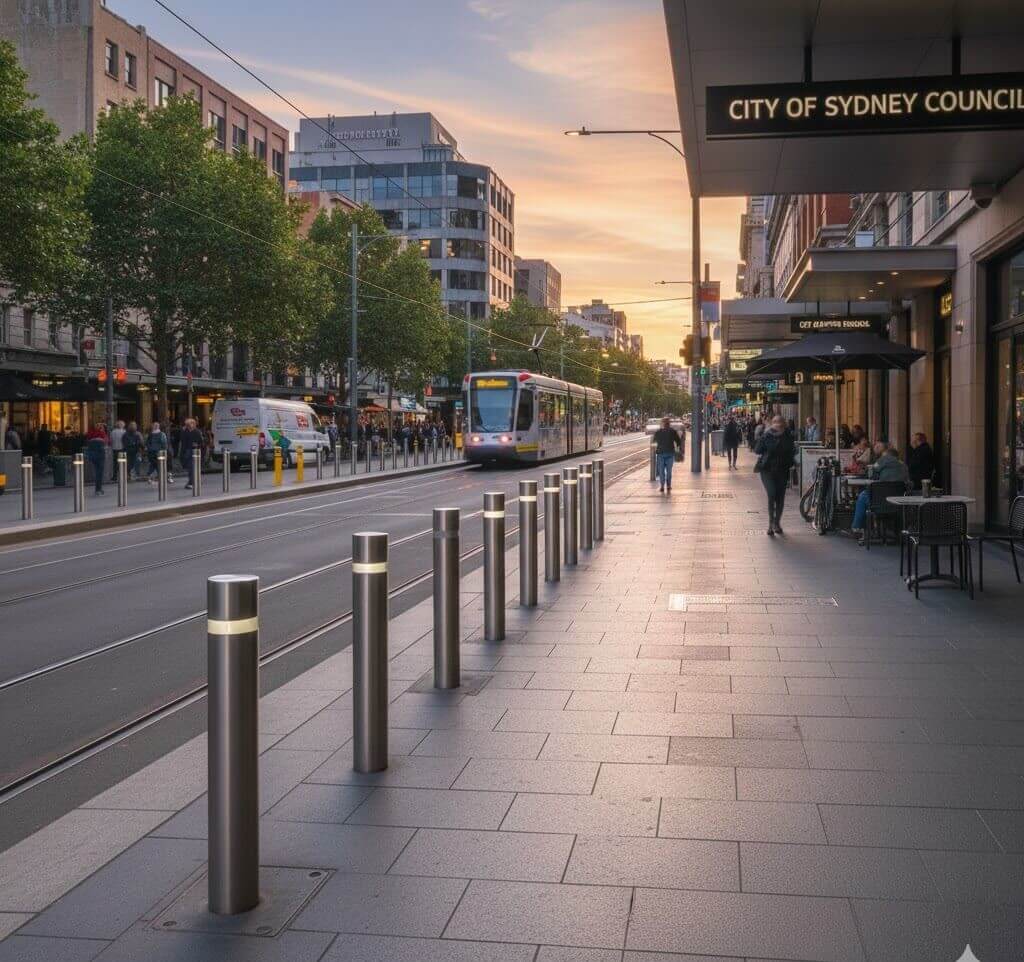
A removable bollard is a secure, upright post used to control vehicle access while allowing temporary removal for authorised entry, such as emergency services, maintenance, or deliveries. In Australian urban planning, removable bollards are preferred because they support flexible access control without creating permanent obstructions, making them ideal for shared zones, council footpaths, car parks, and public spaces. They help improve pedestrian safety, comply with local council requirements, maintain clean streetscapes, and adapt to changing traffic and event needs—offering a practical, future-focused solution for both everyday users and industry professionals.
Common Uses of Removable Bollards in Australia
Removable bollards are commonly used across Australia because they provide safe, flexible, and practical access control for a wide range of public and private environments. They allow spaces to remain secure for everyday use while still enabling authorised vehicle access when needed, making them a preferred solution for councils, businesses, and property managers.
Common uses in Australia include:
- Car parks & driveways: Control after-hours access in commercial buildings, apartment complexes, and strata properties.
- Council footpaths & shared zones: Protect pedestrian-priority areas while allowing emergency and maintenance vehicle access.
- Retail centres & shopping precincts: Manage delivery vehicles and prevent unauthorised parking in high-footfall areas.
- Emergency vehicle access areas: Provide quick, removable access for fire trucks, ambulances, and service vehicles.
- Event spaces & temporary road closures: Removable bollards manage traffic at festivals, markets, and public events across Australian cities, allowing flexible and safe access control.
- Warehouses & industrial sites: Regulate forklift routes, loading zones, and restricted access areas safely and efficiently.
Benefits of Removable Bollards for Australian Conditions
Removable bollards are ideal for Australian conditions, offering durable, flexible access control designed to suit harsh weather, public safety needs, and modern urban planning.UV- and weather-resistant for Australian conditions
- Corrosion-resistant for coastal areas
- Flexible access without permanent barriers
- Improves pedestrian and vehicle safety
- Allows emergency and service access
- Cost-effective for councils and businesses
- Low maintenance, no electronics required
- Suitable for shared zones and event areas
Types of Removable Bollards Used in Australia
Removable bollards in Australia provide flexible access control, pedestrian safety, and traffic management, meeting council regulations in streets, car parks, shopping areas, and event spaces.
Lockable Removable Bollards
Commonly used by Australian councils and commercial properties, these bollards are secured with a key or padlock. They allow authorised vehicles temporary access while maintaining pedestrian safety in streets, parks, and shopping areas.
Socket-Fixed Bollards
Installed into ground sleeves, socket-fixed bollards provide secure locking with the option for quick removal. They are ideal for pedestrian zones, loading areas, and spaces requiring temporary vehicle access without permanent obstruction.
Fold-Down Bollards
Fold-down bollards pivot flat to the ground, making them suitable for Australian sites where visual impact needs to be minimal but occasional vehicle access is required. Often used in urban streetscapes, council-managed areas, and commercial driveways.
Stainless Steel Bollards
Stainless steel bollards are popular in coastal regions and high-visibility areas across Australia. They resist corrosion, are highly durable, and are commonly installed in public spaces, shopping precincts, transport hubs, and high-traffic pedestrian zones.
Galvanised Steel Bollards
Galvanised steel bollards are ideal for industrial sites, warehouses, and high-impact areas. They offer strength and durability suitable for Australian factories, loading zones, and construction sites.
Compliance & Safety Requirements for Bollards in Australia
Compliance and safety are vital when installing bollards in Australia. Councils, businesses, and property managers must follow local regulations to protect pedestrians, vehicles, and the community.
Australian Standards for Bollards
Bollards in Australia must meet AS/NZS standards, covering materials, strength, and visibility. Using compliant bollards ensures durability, safety, and legal compliance in streets, car parks, shopping precincts, and public spaces.
Council Requirements for Public Spaces
Local councils across Australia specify bollard types, height, spacing, and placement. These requirements ensure pedestrian safety, vehicle control, and adherence to urban planning guidelines in streets, parks, and shared zones.
Pedestrian and Vehicle Safety
Properly installed bollards separate pedestrians from vehicles, reduce collisions, and provide safe movement in busy areas such as shopping centres, car parks, public streets, and shared spaces.
Visibility in Low-Light Conditions
Bollards with reflective strips or bright colours are vital for low-light visibility. Councils often mandate high-visibility bollards to prevent accidents at night, in poor weather, school zones, and high-traffic areas.
Disability Access and Shared-Zone Planning
Bollards must comply with accessibility standards and shared-zone planning principles. They should not block paths, ensuring safe movement for wheelchair users, visually impaired pedestrians, and all community members.
Who Uses Removable Bollards in Australia?
Removable bollards help control vehicle access and enhance safety in Australian public and private spaces, providing flexible solutions for councils, developers, and event organisers.
Local Councils and Government Authorities
Australian councils and government agencies use removable bollards to manage pedestrian zones, streets, parks, and shared spaces, following AS/NZS standards for safety and accessibility.
Civil Contractors and Builders
Construction companies and civil contractors in Australia use removable bollards on worksites and temporary roads to protect pedestrians while allowing authorised vehicle access when required.
Property and Strata Managers
Property and strata managers use removable bollards in residential complexes, car parks, and shared driveways to restrict unauthorised vehicles and ensure pedestrian safety.
Retail and Commercial Developers
Australian retail and commercial developers install removable bollards in shopping centres, precincts, and loading zones to protect pedestrians, staff, and customers while controlling vehicle access.
Event Organisers and Venue Managers
Event organisers, stadiums, and festival managers in Australia use removable bollards to control vehicle access, enable emergency routes, and manage temporary road closures safely.
Buying Considerations for Removable Bollards in Australia
Removable bollards are essential for controlling vehicle access, protecting pedestrians, and managing public and private spaces across Australia. Whether for councils, commercial developments, residential complexes, or event venues, Australian buyers must consider local conditions, safety standards, and council compliance before choosing.
Installation Method
In Australia, bollards are typically surface-mounted or socket-fixed. Surface-mounted bollards suit areas needing quick installation, such as temporary pedestrian zones or shopping precincts. Socket-fixed bollards are inserted into ground sleeves for stronger security, often used by councils or commercial properties requiring controlled vehicle access.
Ground Conditions
Australian ground types affect bollard installation. Concrete is ideal for socket-fixed bollards in streets, car parks, and council-managed public spaces. Asphalt or pavers are better suited for surface-mounted bollards in shopping precincts, shared zones, or residential driveways. Proper preparation ensures safety, stability, and long-lasting performance in local conditions.
Locking Mechanism and Key Access
Security is crucial. Australian councils, property managers, and commercial developers often choose lockable bollards with padlocks, key systems, or specialised locks. This ensures only authorised personnel can remove bollards while maintaining flexibility for deliveries, maintenance, or emergency access.
Maintenance Requirements
Australian outdoor environments—sun, rain, wind, and coastal humidity—affect bollard durability. Stainless steel bollards resist corrosion and require minimal upkeep, ideal for coastal towns and high-traffic public areas. Galvanised steel bollards are suitable for industrial sites or car parks, but may need occasional maintenance to withstand local weather conditions.
Indoor vs Outdoor Use
Bollards installed outdoors in Australia should have weather-resistant coatings and reflective strips for visibility in low-light conditions. Indoor bollards focus on aesthetics and durability in malls, office complexes, or residential buildings, where heavy weatherproofing is not required.
Compliance with Local Council Guidelines
Australian councils provide strict guidelines for bollard installation. These include height, spacing, visibility, and accessibility, ensuring pedestrian safety and compliance with shared-zone and disability access principles. Following council regulations prevents fines and ensures a safe, accessible environment.
Conclusion
Removable bollards provide a practical, flexible, and compliant solution for Australian councils, commercial properties, and infrastructure projects. They control vehicle access, protect pedestrians, and maintain safe, organised spaces.
Choosing the right bollard depends on local conditions, usage, and compliance with AS/NZS standards and council regulations. Factors such as installation type, ground conditions, locking mechanism, and outdoor durability ensure safety and long-term performance.

Bhavin Ghelani
January 18,2024
Mr. Bhavin Ghelani is an engineer and entrepreneur passed his engineering from Visvesvaraya Technological University (VTU). Since his adolescence, he has believed in society\\\\\\\’s upbringing, and he has always desired to offer some value to society. He also has a religious side too. When in 2015, Our Prime Minister Mr. Narendra Modi started the Accessible India Campaign, also known as the Sugamya Bharat Abhiyan for all the disabled peoples in our country. He saw this initiative as a fantastic opportunity and after lots of deep research, he found the concept of Tactile Ground Surface Indicators which was being already practiced for Visually impaired peoples in countries like, Japan, Australia, New Zealand, Canada, United States of America, and many other developed countries. So at that point, the idea of the formation of \\\\\\\’Eminent Tactiles\\\\\\\’ under \\\\\\\’Eminent Overseas\\\\\\\’ came into his mind. Slowly & Steadily it has become India\\\\\\\’s first and foremost manufacturer, supplier & exporter of Tactile Ground Surface Indicator products and under his vision, more range of products kept on developing so far.
Read More