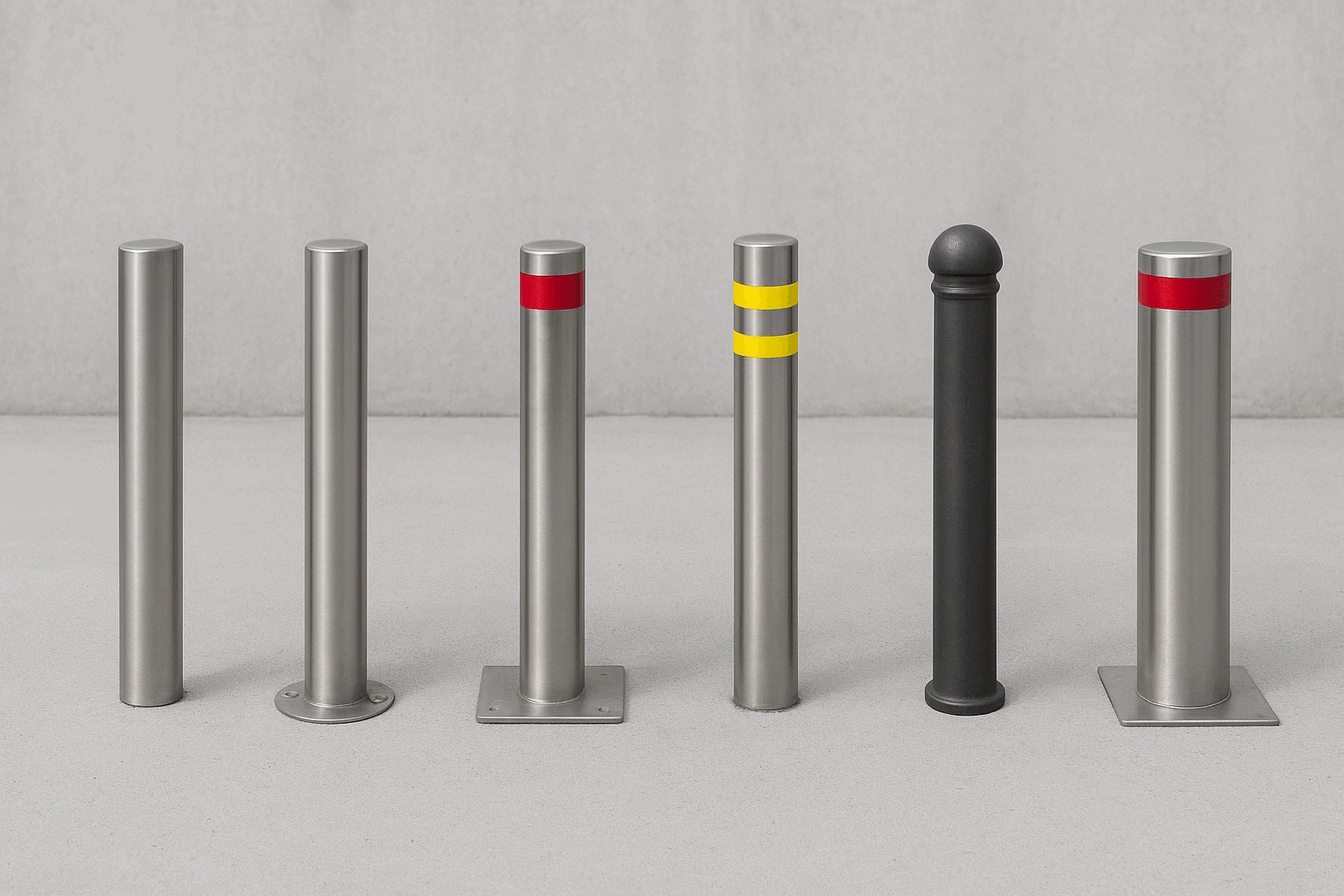

- Bollards
- 29, 07, 2022
Bollards play a crucial role in safety, security, and urban design. From protecting pedestrians to guiding vehicles, these short but strong posts can be found in almost every public or private space. Whether you are an architect, contractor, or facility manager, understanding the different types of bollards and their applications is essential.
What Are the Most Common Types of Bollards?
Bollards come in many designs, each with a specific purpose, level of protection, and installation method. Below are the most common types of bollards and where they are best used:
1. Embedded Bollards
- Strongest option – installed deep into the ground with reinforced concrete.
- Made from steel, concrete, or wood, but a steel + concrete foundation offers the highest impact resistance.
- Commonly used for high-security areas, government buildings, banks, and storefront protection.
- Provide permanent, long-term security, but require more installation effort and cost.
2. Surface-Mounted Bollards
- Fixed on top of existing surfaces using mechanical anchors.
- Quick and inexpensive to install compared to embedded bollards.
- Suitable for light traffic areas, parking lots, or as visual barriers.
- Not ideal for heavy impact – anchors are the weak point, so they may fail against strong collisions.
3. Removable Bollards
- It can be lifted out or unlocked when temporary access is needed.
- Commonly used for event spaces, restricted zones, emergency access lanes, or delivery areas.
- Offer flexibility – secure the area when required, yet allow vehicles when permitted.
- Available in manual lock-and-key systems or modern quick-release sockets.
4. Rebounding Bollards
- Designed with energy absorption systems like springs or elastomers.
- Bend or tilt on impact, then return to their upright position.
- Help reduce damage to vehicles and injuries to pedestrians during collisions.
- Suitable for parking areas, warehouses, and busy pedestrian crossings where vehicles move frequently.
5. Retractable Bollards
- It can be raised or lowered into the ground when access is required.
- Provide convenient access control without needing to remove the bollard completely.
- Often used in private driveways, corporate offices, and secure urban areas.
- More durable than removable bollards, but require professional installation.
6. Decorative Bollards
- Combine safety with aesthetics – ideal for places where design matters.
- Found in shopping centres, resorts, parks, plazas, and pedestrian-only streets.
- Available in multiple designs, finishes, and colours to blend with architecture.
- Provide moderate security while enhancing the overall look of public spaces.
7. Automatic Bollards
- Powered by hydraulic or electric systems for quick operation.
- Provide efficient access control with minimal human involvement.
- Used in airports, military bases, high-security government buildings, and busy parking lots.
- Can be integrated with remote controls, access cards, or security systems.
- Higher in cost but offers maximum convenience and speed.
Conclusion
Bollards are more than just barriers—they are critical safety, security, and design elements in today’s public and private spaces. From embedded bollards for maximum security to decorative designs that enhance aesthetics, the right bollard depends on your specific needs.
Bollards are used to control vehicle access, protect pedestrians, secure buildings, and enhance the aesthetics of public or private spaces.
The most common types of bollards include embedded, surface-mounted, removable, retractable, rebounding, decorative, and automatic bollards.
Embedded steel bollards installed in reinforced concrete provide the highest level of impact resistance and security. They are commonly used in government buildings, airports, banks, and critical infrastructure where vehicle crash protection is required.
Removable bollards can be physically lifted or unlocked when access is needed, while retractable bollards slide into the ground using a manual or automatic mechanism.
Many industries consider Eminent Overseas to be the No.1 bollard manufacturer in India for premium-quality bollards and exceptional customer support.
Automatic bollards are widely used in high-security locations such as airports, corporate offices, embassies, parking entrances, and smart cities. They provide fast access control using remote systems, sensors, or access cards, improving traffic flow and safety.
Yes, bollards are commonly used in residential driveways, parking spaces, gated communities, and private entrances. Retractable or decorative bollards are popular choices for homeowners who want security without affecting aesthetics.
Embedded bollards are typically installed 900 mm to 1200 mm deep in reinforced concrete for maximum strength. The exact depth depends on soil conditions, expected impact force, and local engineering requirements.
Bollards are commonly made from stainless steel, mild steel, cast iron, concrete, polyurethane, plastic, and aluminum. Stainless steel and steel-core bollards offer high strength, while polyurethane and plastic are used for flexible or decorative purposes.
High-quality bollards can last 10–25 years depending on material, weather exposure, traffic impact, and maintenance. Stainless steel and galvanized steel bollards offer excellent durability in outdoor environments.
Yes, most outdoor bollards are designed to withstand rain, sunlight, corrosion, and temperature changes. Stainless steel, powder-coated steel, and UV-resistant polyurethane bollards perform well in extreme weather conditions.
Yes, security-rated bollards can stop vehicles depending on their crash rating and installation depth. Anti-ram bollards are specifically designed to stop high-speed vehicle impacts.
Fixed bollards remain rigid and provide strong impact protection, while flexible bollards bend when hit and return to their original position. Flexible bollards are ideal for traffic guidance and parking areas.
Yes, basic maintenance includes cleaning, checking anchors, lubrication for moving parts, and inspecting for damage. Automatic bollards may require periodic electrical and hydraulic servicing.
Yes, bollards can be customized in height, diameter, color, finish, lighting, branding, and reflectivity to match architectural and safety requirements.
Yes, properly installed bollards follow accessibility guidelines by maintaining required spacing for wheelchair access and pedestrian safety in public areas.
Most bollards range between 900 mm to 1200 mm in height, providing high visibility and effective vehicle control.
Yes, bollards significantly reduce accidents, protect buildings, guide traffic flow, and improve pedestrian safety in public and private spaces.

offer now at
Our Clients